AI Workflow Automation Tools in 2026: The Complete Guide
The best AI-powered workflow automation tools. Compare Zapier, n8n, Coze, and Manus for building intelligent automations.

Short answer
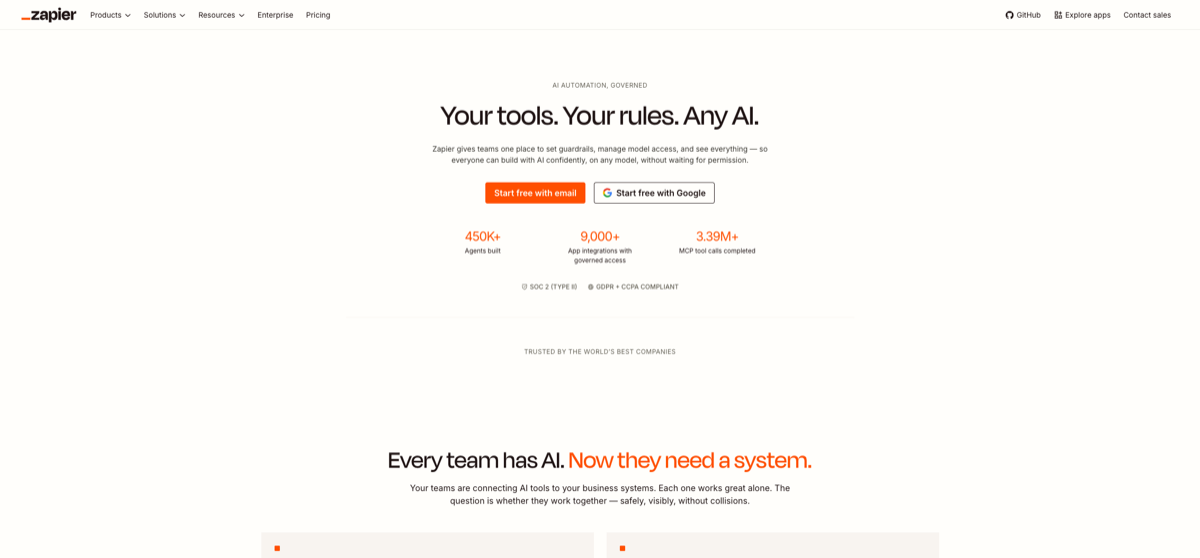
Zapier ($20/mo) is best for business users, connecting 6000+ apps with AI actions and an AI Copilot that builds automations from plain-English descriptions. n8n is the flexible open-source alternative — self-hosted free or cloud at $24/mo — whose AI nodes chain multiple LLMs for technical teams. Coze by ByteDance (free) is an AI-native visual builder for chatbot agents, and Manus is an autonomous general-purpose agent that plans and executes complex tasks end-to-end, currently on a waitlist.
AI workflow automation is the biggest productivity trend of 2026. Instead of simple if-then rules, AI-powered workflows can make decisions, generate content, and handle exceptions intelligently. Here's the state of the art.
Top AI Automation Platforms
| Platform | Best For | Starting Price | AI Capability |
|---|---|---|---|
| Zapier | No-code business automation | $20/mo | AI actions, ChatGPT integration |
| n8n | Technical & open-source | Free (self-hosted) | AI nodes, LLM chaining |
| Coze | AI-first chatbot workflows | Free | Visual AI agent builder |
| Manus | Autonomous AI agents | Waitlist | Full task automation |
1. Zapier — Best for Business Users
Zapier connects 6000+ apps with AI-powered actions. In 2026, its AI features go beyond simple triggers — you can add ChatGPT steps that classify data, generate content, make decisions, and route workflows accordingly. The AI Copilot helps you build automations by describing what you want in plain English.
2. n8n — Best for Technical Teams
n8n is the open-source alternative to Zapier with much more flexibility. Its AI nodes let you chain multiple LLMs, process documents, and build complex reasoning workflows. Self-host it for free or use the cloud version at $24/mo. Ideal for engineering teams that need full control over their automation logic.
3. Coze — Best AI-Native Builder
Coze by ByteDance is built specifically for creating AI agents with workflows. Unlike Zapier (which adds AI to traditional automations), Coze starts with AI as the core. Build chatbots that can browse the web, call APIs, process documents, and make multi-step decisions — all with a visual editor.
4. Manus — Best Autonomous Agent
Manus represents the cutting edge: a general-purpose AI agent that can plan and execute complex tasks autonomously. Give it a goal like "research competitors and create a report" and it browses websites, extracts data, analyzes findings, and generates a document. Still early but very promising.
Key Trends in 2026
What's changing in AI automation:
- AI-first architectures: New tools start with AI at the core, not as an add-on
- Agent-based workflows: Single AI agents replacing multi-step automations
- Natural language building: Describe automations in English instead of visual builders
- Self-healing workflows: AI detects and fixes broken automations automatically
- Multi-model orchestration: Combining GPT, Claude, and specialized models in one workflow
FAQ
- Can AI automation replace Zapier?
- Not yet — Zapier's reliability and app ecosystem are unmatched. But AI-native tools like Coze are catching up fast.
- Is n8n better than Zapier?
- For technical teams, yes — it's more flexible and free to self-host. For non-technical users, Zapier is easier to use.
Related Tools
Related Articles
Get the AI tools newsletter
Weekly picks: new tools, comparisons and buying notes. No spam, unsubscribe anytime.