ElevenLabs vs Murf: Synthesis vs a Voice Studio
ElevenLabs generates voices and meters characters; Murf builds a narrated project. They start $13 apart and do different jobs.
Short answer
Both offer a free tier and then diverge on what they are for. ElevenLabs is a synthesis engine: Starter is $6/mo and Creator $22/mo, with the widest language coverage of our audio tools, and it meters characters — which our catalog also records as a real limit, since the free tier's quota is low and long content gets expensive. Murf is a voice studio at Creator $19/mo and Business $66/mo, which is the better fit when you are assembling a narrated project rather than generating one line at a time. Neither is the right tool for cloning without consent, and if the job is turning speech into text rather than text into speech, the answer is Whisper, which runs the opposite direction.
These are usually compared as two voice products, but they sit at different points in the work. One is an engine you send text to, priced by how much text you send. The other is a studio where you assemble a narrated piece. The $13 between their entry tiers is the least interesting difference.
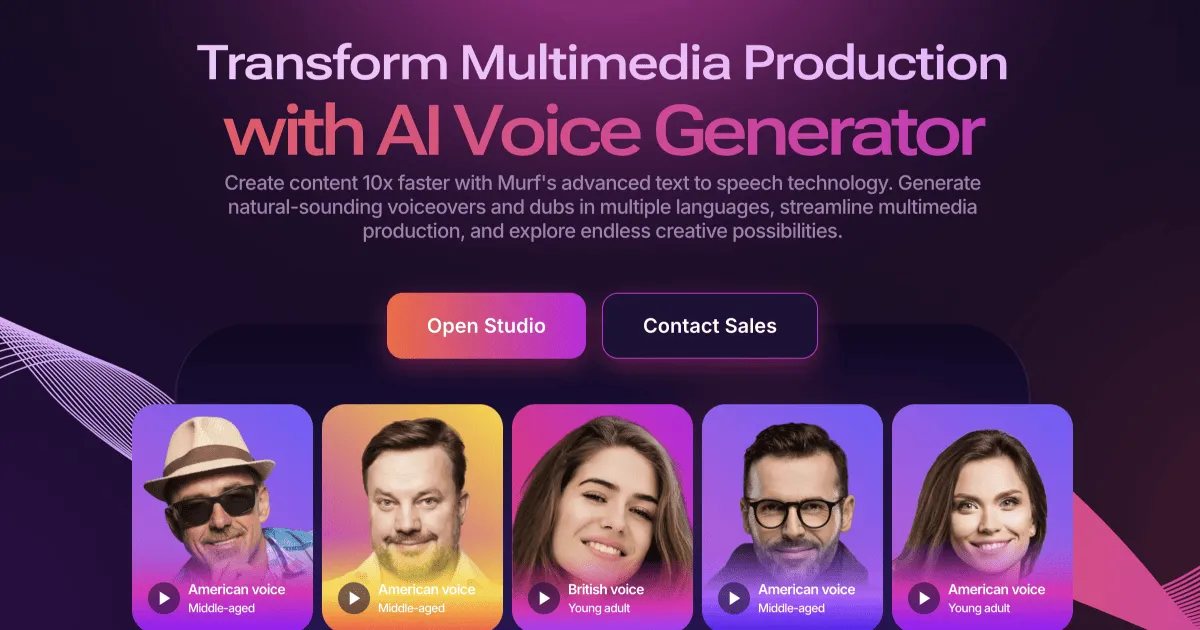
ElevenLabs is the engine: Starter at $6/mo, Creator at $22/mo, free to evaluate, and the broadest language coverage among the audio tools in our catalog. It also meters characters, and our catalog records the consequences honestly — the free tier's quota is very low, and long content gets expensive. That is not a flaw so much as the pricing model, and it suits short-form work: ads, UI lines, a handful of voiceover variants. Murf is the studio, Creator at $19/mo and Business at $66/mo, arranged around assembling a narrated project with editing rather than generating a line and moving on. Whisper is in a different business entirely, so much so that comparing it here is a category error: it is open source and free to run yourself with a metered API, and it transcribes speech into text rather than synthesising it.
| Tool | Entry price | Job | Constraint |
|---|---|---|---|
| ElevenLabs | Free / $6/mo Starter / $22/mo Creator | Generating voices, wide language coverage | Characters are metered; free quota is very low |
| Murf | Free / $19/mo Creator / $66/mo Business | Assembling a narrated project | Less suited to one-line generation |
| Whisper | Open source free / metered API | Transcribing speech to text | Opposite direction to synthesis |
Two things to weigh before paying. First, the metering decides your cost more than the tier label does: an ElevenLabs project that generates a script once is cheap, and the same project that regenerates every line five times is not, so budget for retakes rather than for minutes. Second, neither tool is a legal shortcut. Voices are personal data in several jurisdictions, so cloning a real person without documented consent is a legal problem, not a style choice, and the tool will not ask whether you have that consent. Our catalog also notes that ElevenLabs is not for projects needing the most natural Chinese voice, which matters if the target language is Chinese.
Choose by what you are producing:
- Short lines, many variants, wide language reach → ElevenLabs
- A narrated project you edit and assemble → Murf
- Transcribing existing speech → Whisper, a different job
- A clone of a real person → only with written consent, in either tool
Frequently asked questions
- Is ElevenLabs or Murf better?
- They do different jobs. ElevenLabs is a synthesis engine at $6/mo Starter, and Murf is a studio at $19/mo Creator for assembling a narrated project. The cheaper entry is not the better one.
- Why does ElevenLabs get expensive?
- Because it meters characters. Our catalog records that the free quota is very low and long content gets expensive, so the cost tracks how much you generate and regenerate, not the tier name.
- Which is better for Chinese voiceover?
- Our catalog notes ElevenLabs is not the pick for the most natural Chinese voice, so test that specific language on the free tier before committing to either.
- Is Whisper a voice generator?
- No. It transcribes speech into text and runs in the opposite direction to synthesis. It is open source and free to self-host, with a metered API.
Related Tools
Related Articles
Get the AI tools newsletter
Weekly picks: new tools, comparisons and buying notes. No spam, unsubscribe anytime.